Industrial Latches & Mechanical Fastening Solutions

What is a LatchLock?

A LatchLock is a mechanical fastening solution used to securely join two panels, doors, covers or surfaces while still allowing them to be opened when required. Industrial latches are widely used in machinery, access panels, transport equipment, enclosures and heavy duty applications where reliable closure, safety and repeatable operation are important.

Basic Explanation What is a latch?

A latch is a type of mechanical fastener used to join two or more objects, surfaces or panels together. Unlike a permanent fixing, a latch allows the connected parts to be opened, released or separated when needed.

In most applications, the latch engages with another component on the opposite mounting surface. This receiving component is usually called a strike or keeper. Together, the latch and strike create a secure closing system for panels, covers, doors or machine guards.

A latch is not the same as a complete locking mechanism. A lock is mainly designed to prevent unauthorized access, while a latch is designed to hold parts together mechanically. In many industrial products, both functions can be combined in one system.

LatchLock industrial latch and fastening solutions logo

How it Works

How Does a Tension Latch Operate?

A tension latch uses lever action to pull two panels or components together. This makes it especially useful for industrial applications where panels need to be closed firmly, opened regularly and secured with consistent clamping force.

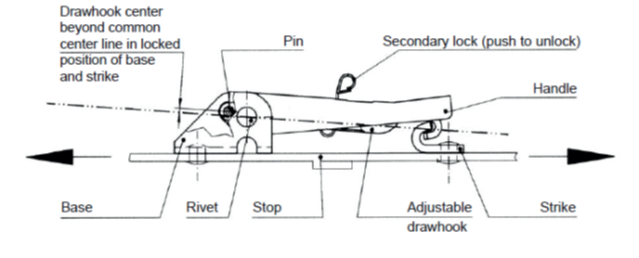
Main components of an industrial tension latch and strike system

Latch Components

Main Parts of a LatchLock System

A typical industrial latch system consists of a handle, base, drawhook and strike. When the handle is closed, the drawhook engages with the strike and pulls the connected panels together.

Latch body

The main mounted part that carries the handle and drawhook.

Drawhook

Pulls the strike towards the latch to create tension.

Strike or keeper

The receiving component mounted on the opposite panel.

Secondary lock

Optional safety feature to help prevent accidental opening.

Lever Action

Why Tension Latches Pull Panels Together

Tension latches are safe and reliable locking systems for industrial applications. They can handle high tensile loads, making them suitable for machine covers, industrial access doors, vehicle panels, enclosures and other equipment where secure fastening is required.

Through lever action, the parts connected with the latch and the strike are pulled together. This creates a firm closure and helps keep the panel in position during use. When needed, a mechanical stop should be provided to prevent over-travel or incorrect load transfer.

Lateral forces must be kept away from the tension latch by the design of the connected parts. A latch is designed mainly to handle pulling force. The surrounding construction should guide and support the panels so that side loads do not damage the latch or reduce its performance.

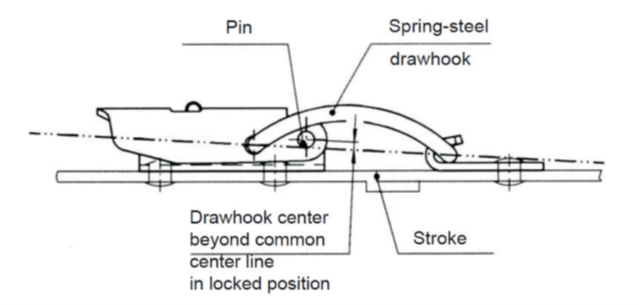
Drawhook components and positive lock position in a tension latch

Positive Lock

How Positive Locking is Achieved

A positive lock is achieved when the drawhook center moves beyond the common center line of the base and strike. This over-center position helps keep the latch securely closed during normal operation.

For unlocking, the secondary lock is operated first, after which the handle can be lifted. For locking, the secondary lock automatically engages on compatible models, helping reduce the risk of accidental opening.

Many tension latches can be adjusted by the drawhook. This makes it possible to fine-tune the closing force and compensate for installation tolerances. In fixed latch series, a spring-steel drawhook can provide tolerance compensation.

Application Advice

Where Are LatchLocks Used?

LatchLock products are used in many industrial environments where parts must be closed securely but still remain accessible for inspection, maintenance or operation.

Machine Covers

Secure machine covers, inspection hatches and service panels while allowing fast access for maintenance teams.

Industrial Enclosures

Keep electrical, mechanical or technical enclosures properly closed in demanding production environments.

Vehicles & Machinery

Use robust latches for agricultural machinery, transport equipment, heavy duty panels and mobile applications.

Choosing the Right Latch

How to Select the Correct LatchLock

The right latch depends on the tensile load, installation space, panel thickness, vibration level, mounting method and whether a secondary lock is required. For compact applications, a light duty latch may be sufficient. For larger panels or more demanding use, a medium duty, heavy duty or SLAM latch can be the better choice.

Always consider how often the latch will be opened, whether the panel must be pulled tightly against a seal, and whether the application requires a concealed base, open base, adjustable drawhook or corrosion-resistant material.